A strategic vision to shape AI-powered orchestration
Leading cross-functional discovery to transform scattered AI ideas into an actionable product strategy
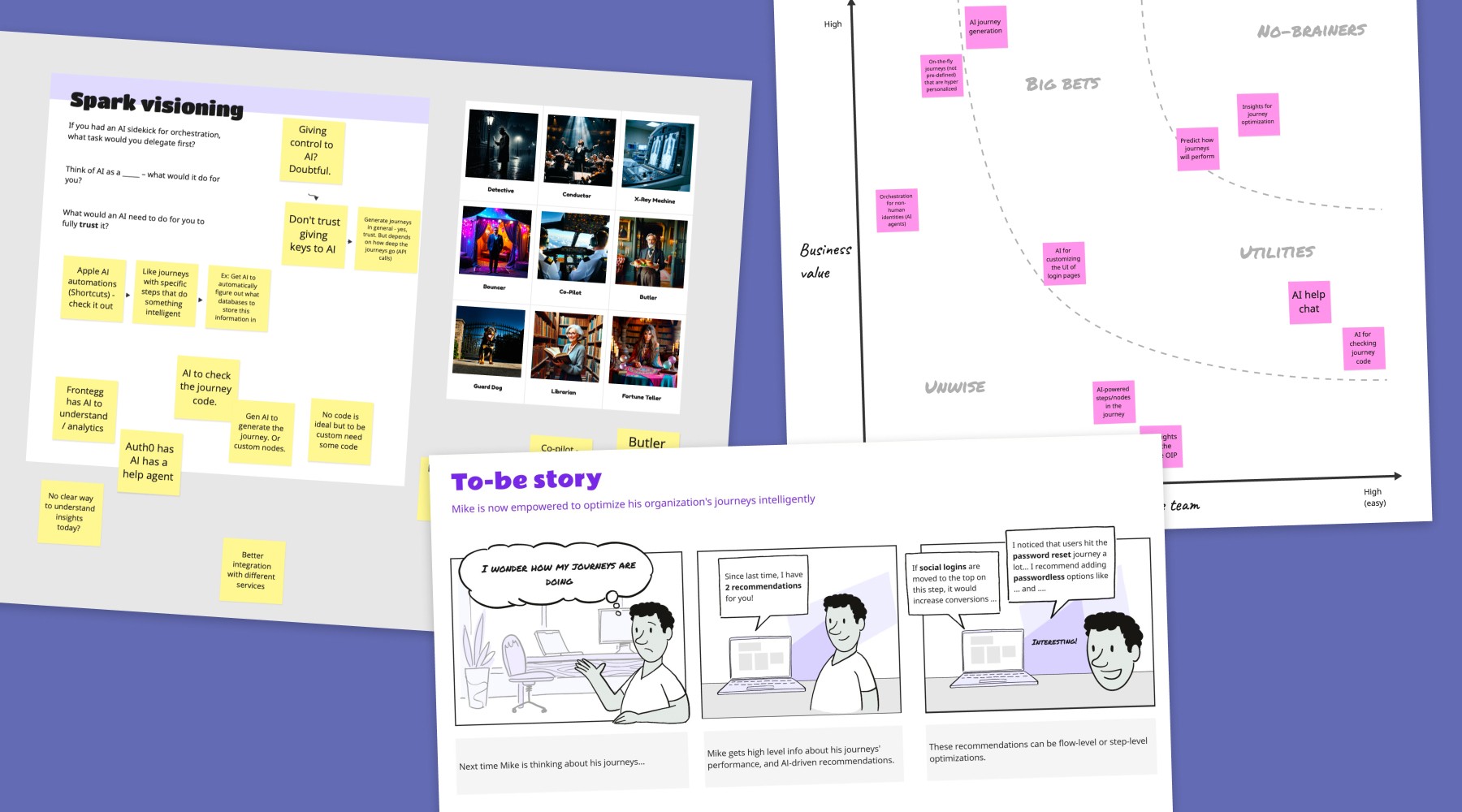
Snapshot
Role: Lead designer/researcher
Project type: Strategic vision work
Team: Director of UX, Senior Product Manager
Timeline: 1 month
Context
Becoming another “me-too”
Our platform’s user journey orchestration capability, originally a key differentiator, was losing ground. Competitors had caught up with similar or better offerings.
AI enthusiasm
Simultaneously, AI enthusiasm was spreading across the organization, with many team members throwing around various ideas for AI features.
Proving UX strategy
The UX team faced its own challenge: we were stuck in a cycle of tactical execution work, reacting to product requirements rather than shaping product strategy. We needed to prove UX could drive direction, not just deliver designs.
Problem/opportunity
The Director of UX and I saw an opportunity. We teamed up with a product management leader who was grappling with a trove of AI ideas but struggled to hone a vision to rally the team around.
How might we move the organization from scattered ideas to a prioritized, actionable vision that guides product investment in AI and differentiates our orchestration platform?
1:1 workshops for strategic discovery
I designed and facilitated a structured vision intake workshop to gather all the floating ideas, making sure to thoroughly understand the context of each participant’s challenges while preparing visual aids to spark ideation.
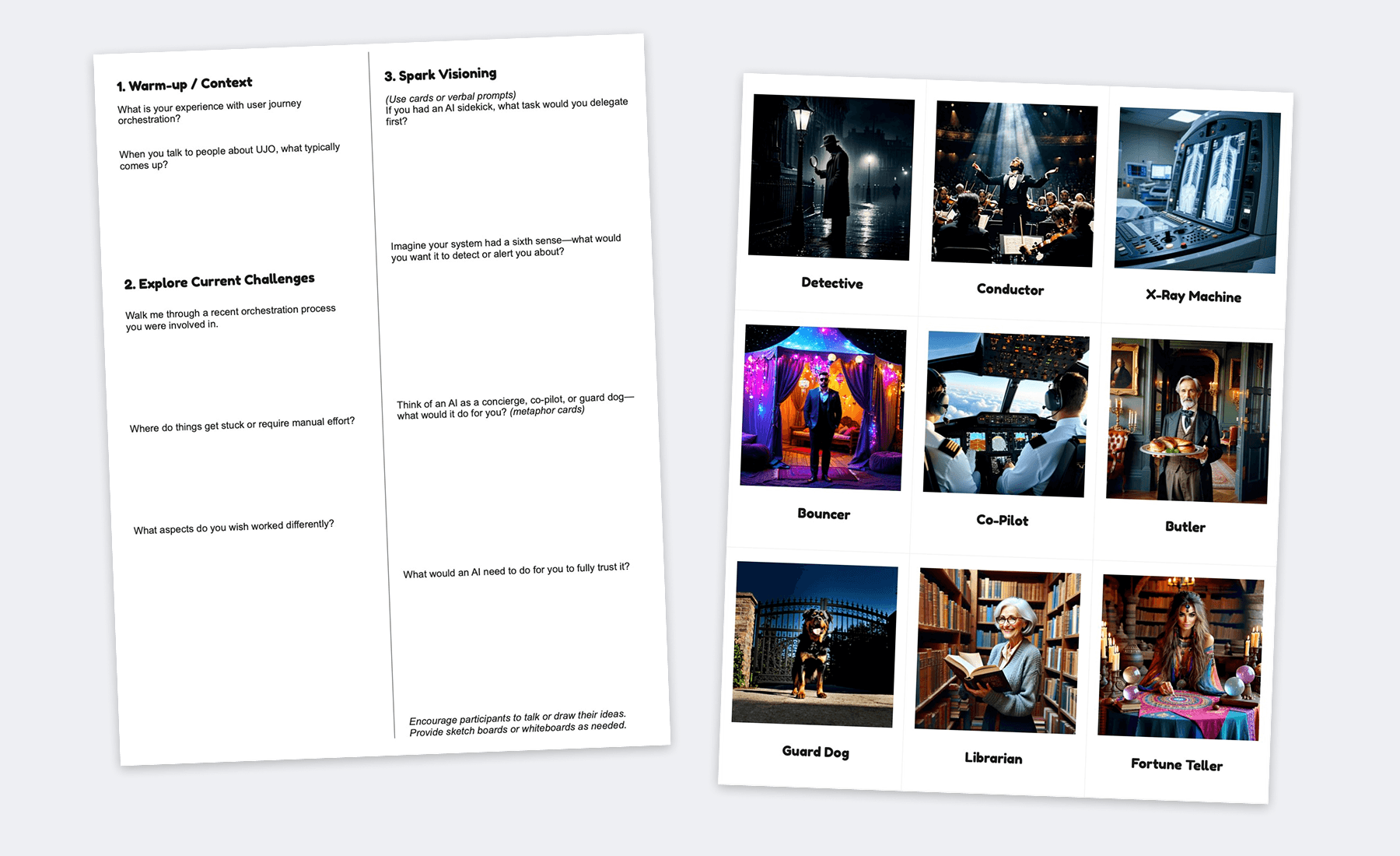
Some of the workshop prep artifacts, including a sheet of AI metaphor cards we created to kickstart conversations for how AI can play a role in addressing any identified problems.
I recruited 6 key stakeholders across sales, product, and innovation teams. A one-on-one generative interview format was used to avoid groupthink and capture unfiltered perspectives. The live workshop activity kept things collaborative and engaging.
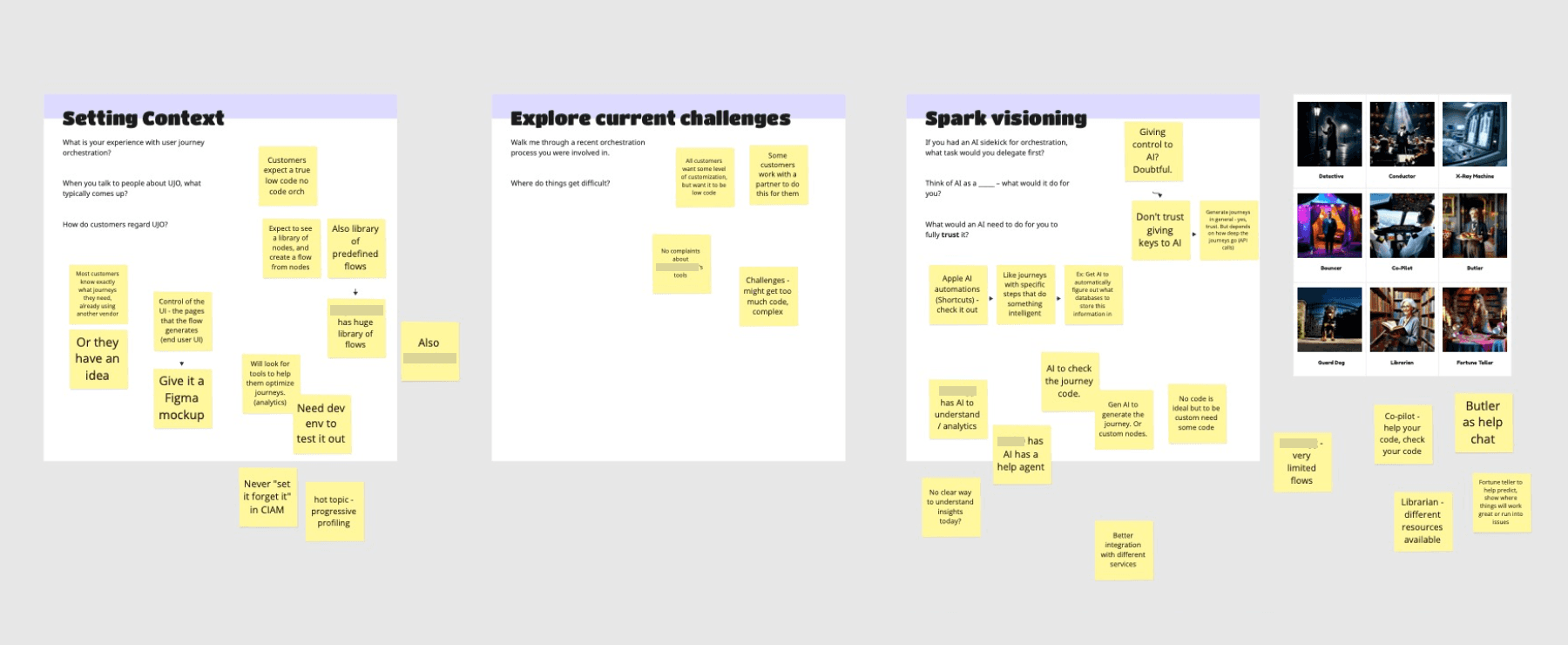
A view of the completed workshop board from one of the sessions
I collected insights from parts of the business that I’m normally not exposed to, and through affinity mapping distilled all the inputs to 10 distinct AI opportunity areas for orchestration and beyond.
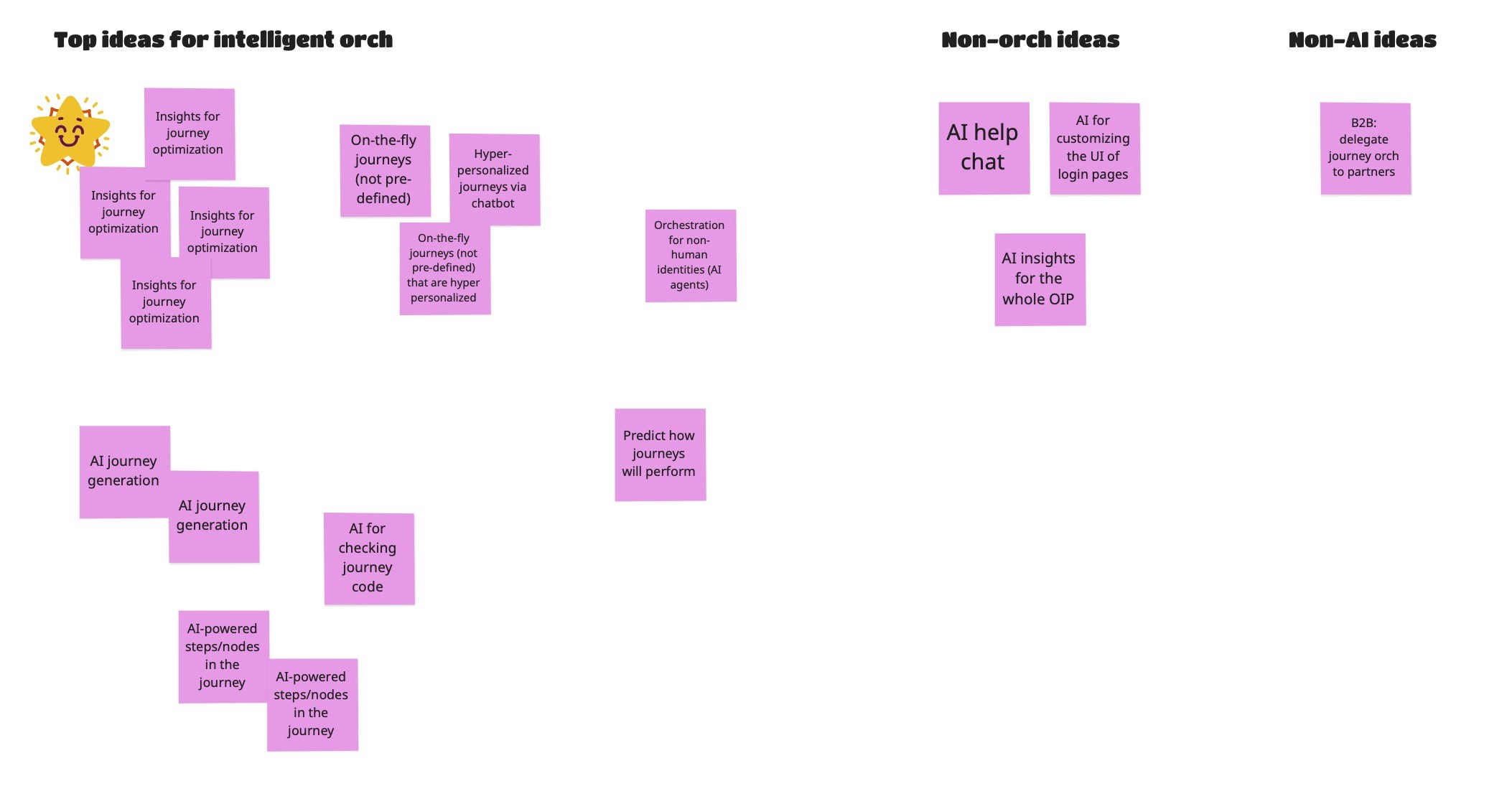
Creating clarity from a bank of scattered ideas
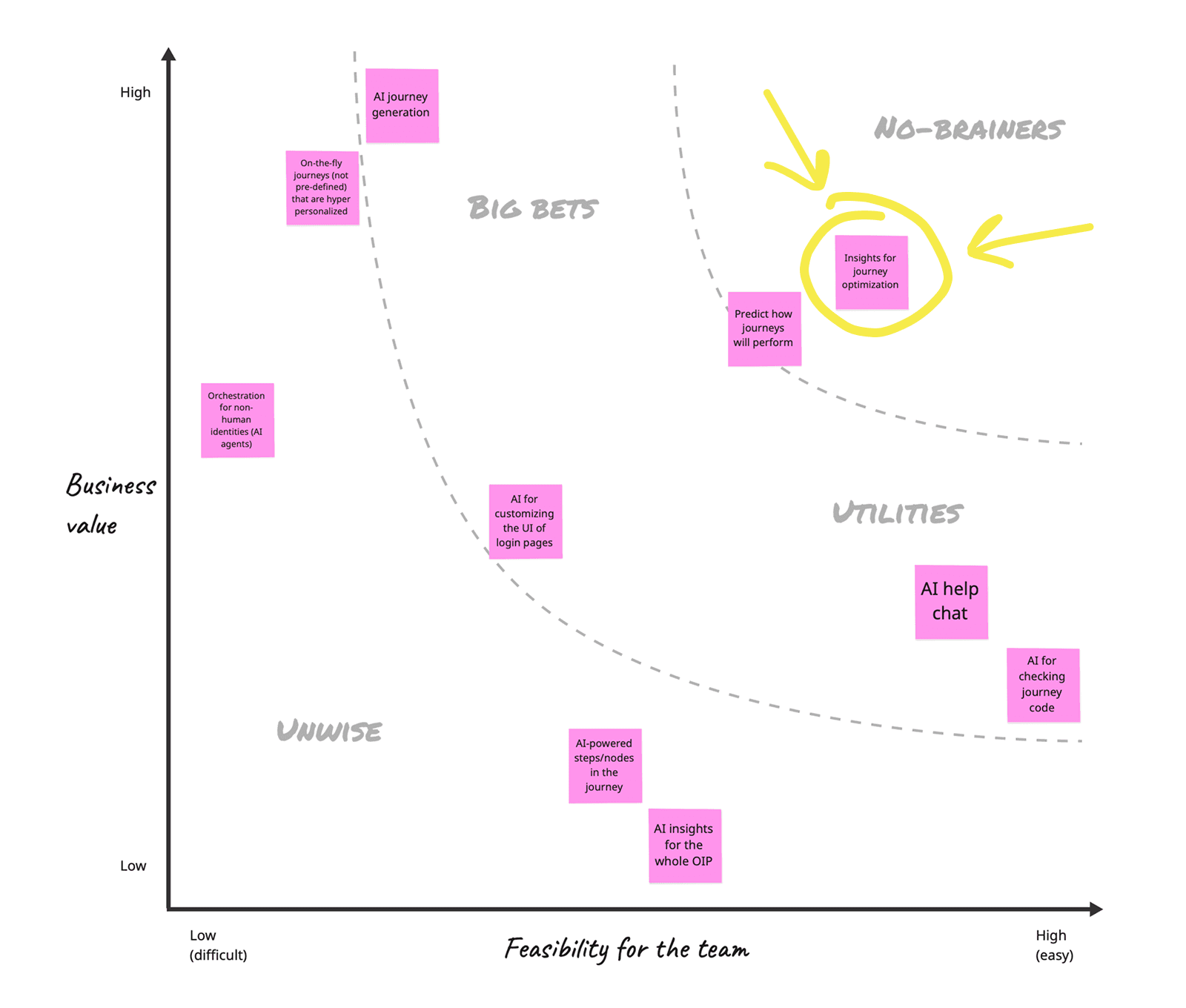
10 different ideas is still a lot - it was time to assess which ones were the most promising ones. I turned to the classic prioritization matrix: business value (impact) vs feasibility (effort).
Using some info gathered from the workshops and additional inputs from other product managers, I gathered rankings of the business value of each idea. I consulted with different engineering team members to get gut rankings on the feasibility.
I plotted it onto the matrix and aligned my teammates on the most promising “no-brainer” item: insights for journey optimization.
Communicating the idea with storyboards, not wireframes
Why did AI insights matter? What would it feel like? We needed something that stakeholders can see, feel, and react to. Rather than creating conceptual UI mockups, I decided it would be more effective to get the audience behind a story first. This way the focus is on the human aspect, such as the value it adds to our customers’ lives, rather than visual details and interface mechanics.
Using the “as-is” and “to-be” narrative framework, I created storyboards to depict our learnings about the problem and the potential solution.
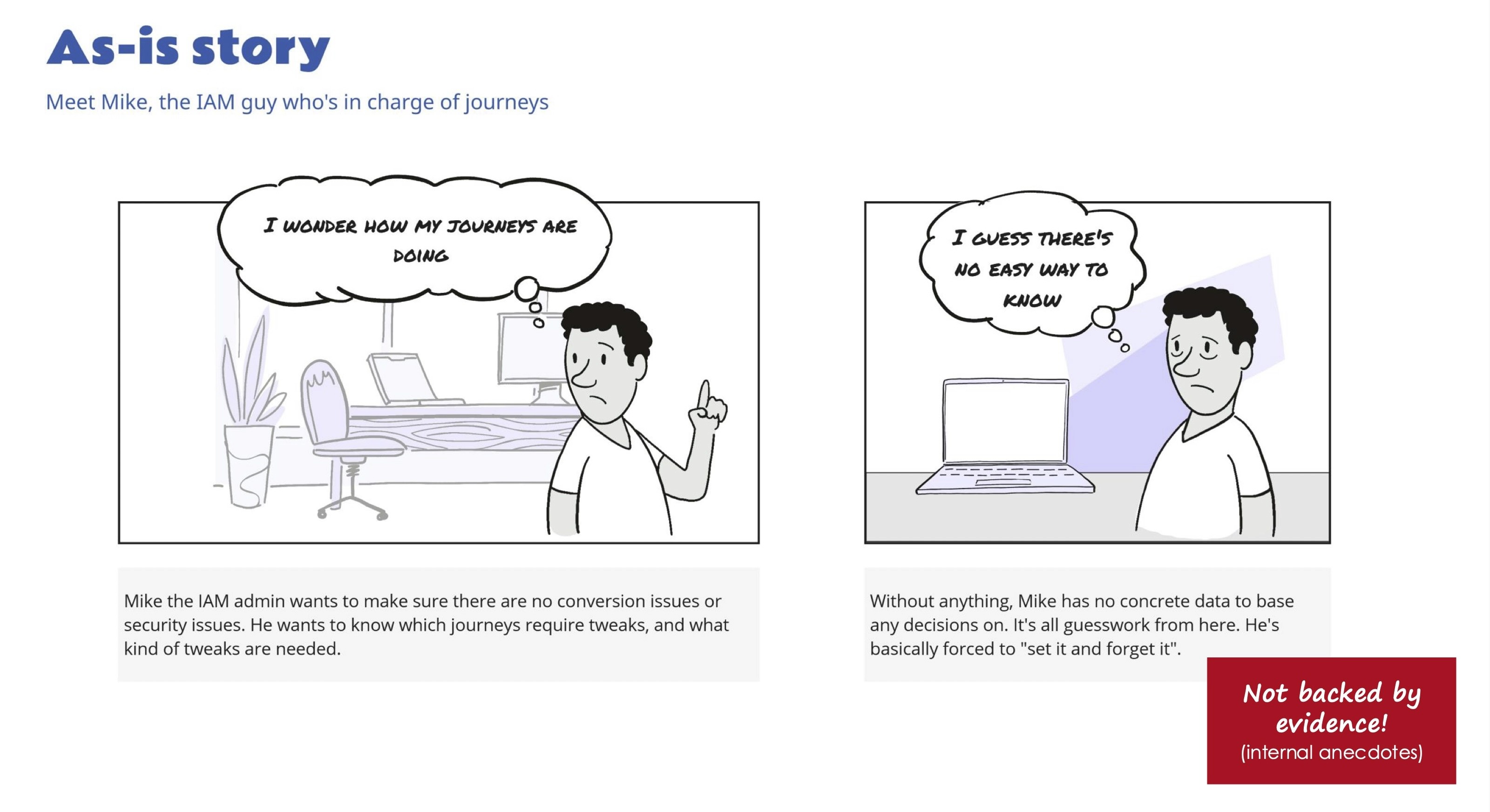
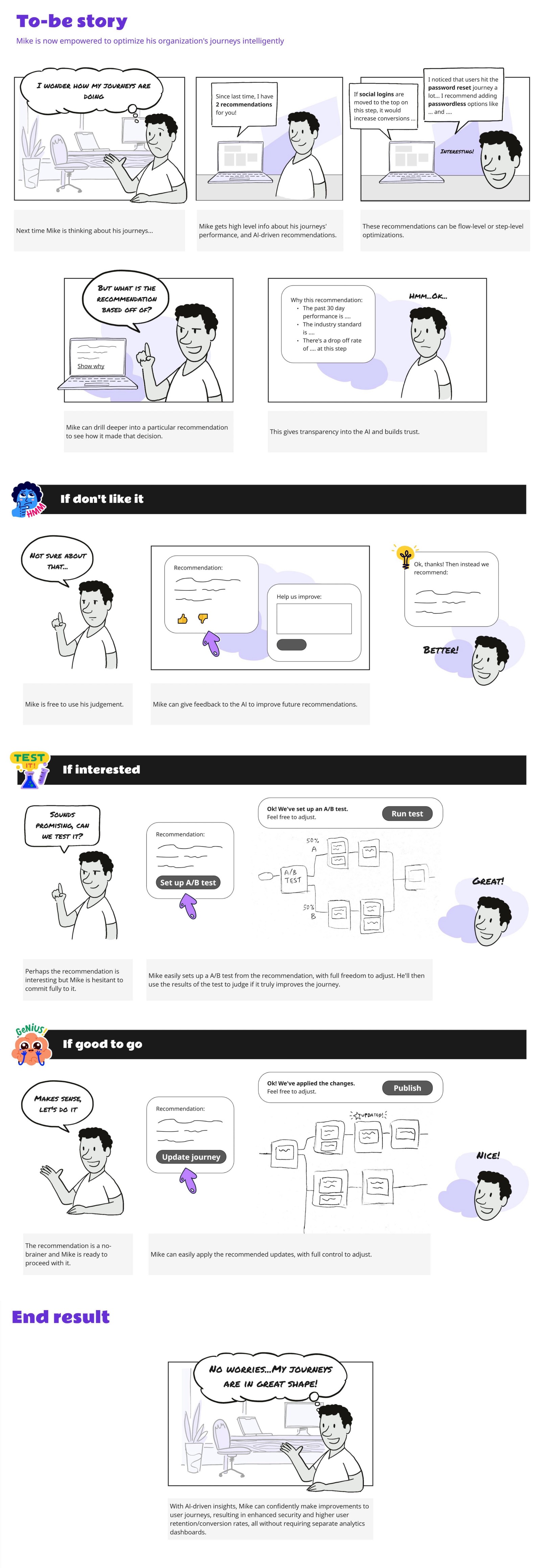
I used a Miro storyboarding template to efficiently get these visuals done, as this level of fidelity was appropriate for this internal audience.
All of this culminated in a presentation to the leadership council (which includes execs from product, engineering, sales, marketing). The response revealed something important - while the idea of AI insights was not new to those in the room, seeing a concrete, user-centered narrative brought a shared clarity that abstract discussions hadn't achieved.
Calling out what we still didn’t know
Through all of that, I made sure to drive home a critical point: everything represented so far is an inside-out point of view, synthesized from internal sources.
Before allowing us to proceed with this strategic decision, I urged that we gather external evidence like real customer data to test our assumptions.
Impact
Organizational alignment on AI strategy
Stakeholders and leadership developed a tangible sense of clarity on what kind of solution we should be working towards, rather than proceeding with abstract ideas that get easily misinterpreted.
Framework for future ideas
Established a repeatable framework for the product team to evaluate AI feature ideas that balanced innovation with customer value.
Repositioned UX as a strategic partner
Demonstrated that UX could drive product direction, not just respond to it, by utilizing our strengths in research, discovery, and visual communication.
Next Steps
Gather external data (critical priority)
Do generative research and market analysis to validate our assumptions in the vision:
Do our admin users experience this pain point?
Is AI-powered insights the best way to solve this problem, or are there other ways to solve it?
What are competitors doing about this pain point?
Expand internal collaboration
Set up a cross-functional workshop to collaboratively refine the vision, extending to other key stakeholders who could provide more information, such as any technical constraints or opportunities to consider. This would also build greater organizational ownership for this vision.
Prototype ideas for the experience
Creating an interactive prototype will make the vision more tangible and testable. I would use AI vibe coding tools which I found work great for rapid prototyping.
Back to home
